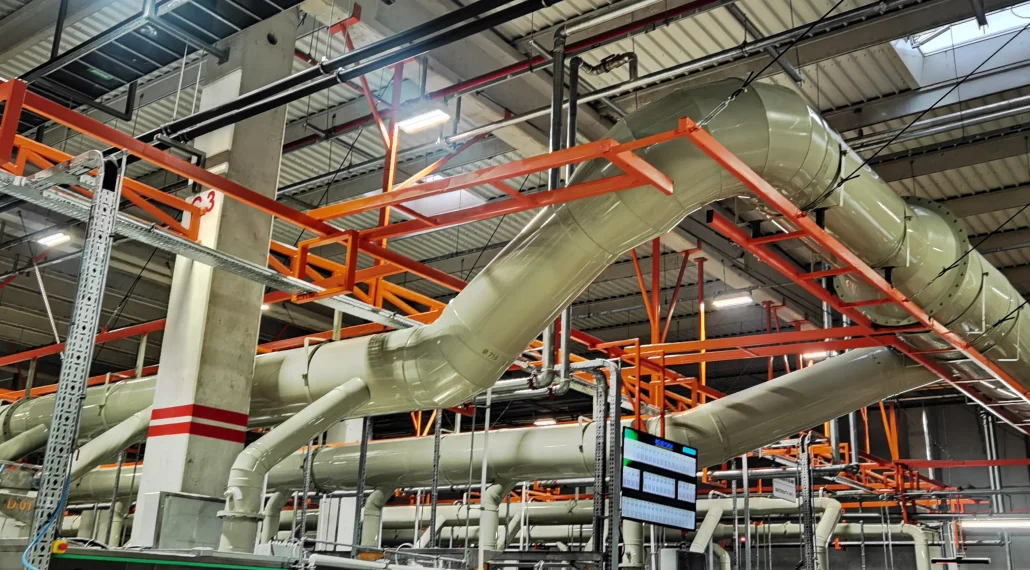
Controlling chemical vapors and gases is a fundamental requirement in industrial and commercial facilities.
PP (Polypropylene), HDPE (High-Density Polyethylene), and PVC (Polyvinyl Chloride) ventilation ducts provide an excellent solution to meet these critical requirements.
As Barat Industrial Plastic Engineering, we manufacture customized solutions for your mechanical ventilation systems in line with your needs, without any size or dimension limitations.
Our ventilation ducts are manufactured using European-origin imported sheets and produced with a vertical welding method.
Chemical Resistance: PP, HDPE, and PVC exhibit high resistance to aggressive chemicals, making them ideal for the safe removal of chemical vapors and gases from the environment.
Corrosion Resistance: Compared to metal alternatives, PP, HDPE, and PVC ducts virtually eliminate corrosion risk and provide long-term performance.
Suitability for Various Application Areas: PP, HDPE, and PVC ducts are suitable for a wide range of applications, from industrial plants and laboratories to hygienic food processing facilities and healthcare institutions.
Lightweight and Easy Installation: The lightweight nature of these materials improves portability and speeds up installation, thereby reducing installation costs.
Long Service Life and Low Maintenance Requirement: PP, HDPE, and PVC ducts offer long-lasting performance with minimal maintenance needs, helping to reduce operating costs.
Leak Tightness: Depending on application requirements, flanged or welded joints are preferred. Both methods provide significantly better sealing compared to slip-fit joint alternatives.
Fire Resistance: These materials are resistant to fire and help prevent flame spread.
Chemical and Petrochemical Industry: Ideal for the safe removal of chemical emissions in chemical plants, oil refineries, and petrochemical facilities.
Food Processing and Production Facilities: Provides a hygienic ventilation solution for food processing plants, beverage production facilities, and packaging plants. The raw materials used have food compliance certification.
Laboratories and Research Centers: Ensures safe ventilation for chemical testing laboratories, research centers, and pharmaceutical production facilities.
Healthcare Facilities: Helps create sterile and safe environments in hospitals, clinics, and healthcare centers.
Here you can find answers to frequently asked questions about ventilation ducts. Review the questions below to learn more about the correct selection and use of ventilation systems.
Our ventilation ducts are manufactured from PP (Polypropylene), HDPE (High-Density Polyethylene), and PVC (Polyvinyl Chloride) thermoplastic materials.
The dimensions of ventilation ducts are determined based on the needs of the facility or area, the design specifications of the ventilation systems, and the application requirements.
Our expert engineers determine the most suitable duct dimensions by performing the necessary calculations.
Ventilation duct installation is carried out effectively and safely when done with proper planning, appropriate equipment, and appropriate safety precautions.
Unlike metal ducts, thermoplastic ducts are lightweight, making installation easier.
They are joined using flange connections or welding, depending on the location and application.

 en
en tr
tr